

The Most Noticeable Online Casino Design Trends in 2026
Online casino design in 2026 is moving towards clearer, faster interfaces. The main changes concern mobile use, finding games, live-casino presentation, localisation and safer-play tools. Visual identity still matters, but players also need to find games and account controls without unnecessary steps.
Mobile-First Layouts Set the Direction
Casino sites are increasingly built around smartphone use. Large touch targets, short navigation bars, portrait-friendly game cards and horizontal rows make large catalogues easier to handle. Search, favourites and key categories can stay accessible without filling a small screen with competing menus.
The change is easy to recognise on Nolimitway, where slots, live casino and roulette are separated into distinct browsing routes. This structure helps visitors move directly towards a preferred section instead of scanning one long lobby.
Performance also influences appearance. Heavy banners, oversized animation and repeated pop-ups take valuable space on phones, so cleaner pages are more practical. Game artwork can provide colour while navigation and account actions remain visually consistent across screen sizes.
Cleaner Lobbies Make Games Easier to Find
Casino lobbies increasingly resemble organised catalogues. Rows for new releases, live tables, jackpots or popular titles create clear entry points, while search and provider filters reduce browsing time. Compact cards can show more games without producing an endless grid of equally prominent thumbnails.
Visual hierarchy is also stronger. Primary actions are easier to spot, secondary information is quieter and fewer colours compete for attention. Dark backgrounds remain common, but contrast matters more: navigation, game images, balances and account controls need to stay readable at a glance.
Personalisation is appearing in practical forms. Recently played games, favourites and recommendation rows can shorten the route back to relevant content. The useful approach is to keep them clear without pushing search, category browsing or safer-gambling controls into less visible areas.
Casino Visual Identity Is Becoming More Distinctive
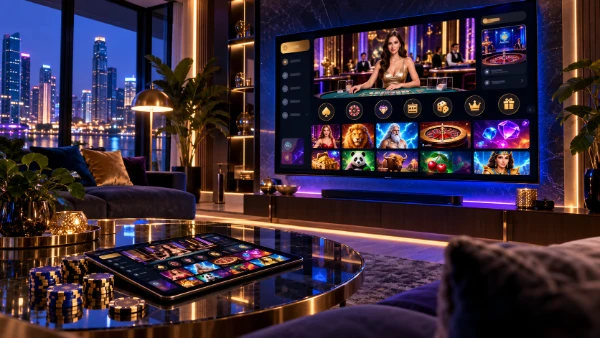
Modern casino sites rely less on generic combinations of cards, chips and roulette wheels. Custom illustration, recognisable typography and game artwork help create a more consistent identity. This matters when different operators carry many of the same suppliers and titles.
Live casino shows the shift clearly. Pragmatic Play released Crystal Roulette in March 2026 with a transparent wheel, purpose-built studio styling and dedicated camera angles. Gates of Olympus Roulette followed in April, carrying an established slot theme into a live roulette setting.
Entertainment-led formats reinforce the trend. Evolution expanded MONOPOLY Live in the United States in 2026, combining a large physical wheel with a recognisable game-show setting. Live tables are increasingly designed as broadcast scenes that must remain readable on a phone.
Localisation and Safer-Play Design Are More Visible
Localisation now goes beyond translated menus. Evolution launched Crazy Time Brasil from its Sao Paulo studio in March 2026 with Brazilian Portuguese presenters. Regional versions may therefore need tailored hosts, imagery, text lengths and navigation choices rather than a direct translation.
Regulation also affects visible design. Current UK Gambling Commission standards prohibit turbo and quick-spin features and do not allow celebratory effects when a return is no greater than the stake. Its customer-interaction rules also require operators to identify risk and take appropriate action.
The strongest direction in 2026 is balance. Rich artwork and live video remain important, but they are increasingly paired with mobile clarity, structured browsing, localised content and accessible account controls. A modern casino interface is judged by both its appearance and how easily a player can manage it.